
The significance of funeral rituals and traditions in South Africa
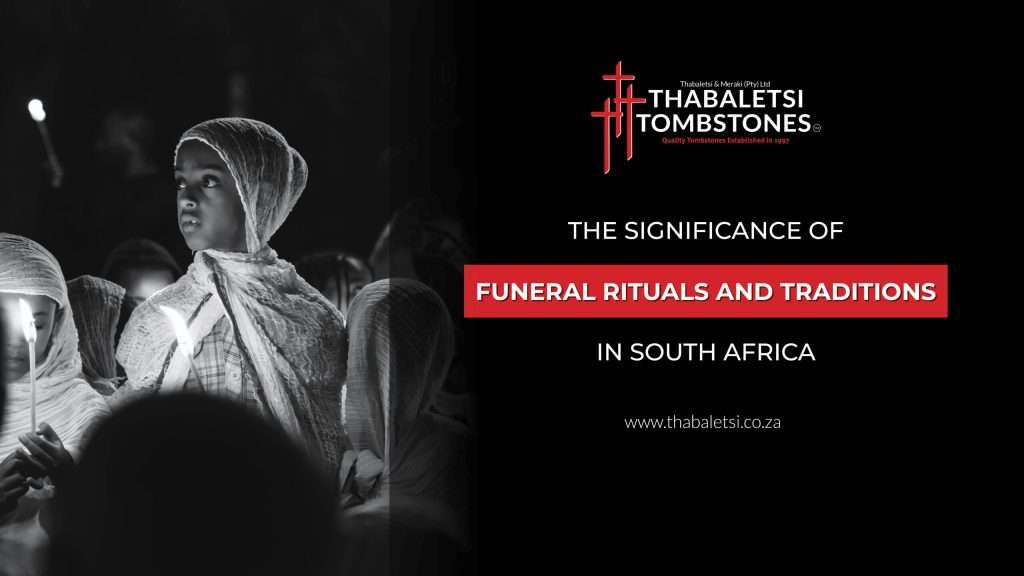
In South Africa, age-old practices provide solace, honour the departed, and offer a communal grieving and healing framework.
We’re going to unveil some of the rich tapestry of beliefs and ceremonies that underline the importance of honouring life’s transitions in South African society.
South Africa has a rich multicultural heritage, with an array of traditions from the Zulu, Xhosa, Pedi, Christian, Jewish and Muslim religions and cultures that hold major significance.
- The rich multicultural heritage of South Africa
South Africa boasts a rich tapestry and infusion of cultures, religions, races and beliefs. We are recognised as one of the top ten nations in the world for our pool of diversity in many aspects, ranging from the unique biodiversity of plants and animals to even linguistic diversity.
From the vibrant and delicate beadwork of the Zulu people to the flavourful curries crafted to perfection by Hindus, our nation is dynamic and diverse.
Jazz, hip-hop and the rise of techno dominate the nation’s music scene. Not to mention, the extensive and popular dances that accompany these various genres.
What is of lesser knowledge and not as widely explored, are the various funeral rituals and traditions of our people.
- Various funeral traditions and rituals in South Africa
- Zulu
Zulu perform ritualistic animal killings as a means of cleansing away the pollution of death. For example, they slaughter a goat (or an ox occasionally) to wash away this pollution.
Zulu people partaking in a burial use a mix of roots and leaves to purify their hands and also the tools they use. They also repeat this action both before and after the burial. Family members may then use ‘umsuzwane’, a plant called Lippia javanica, to ward off evil spirits. They sometimes also use dried stems to sweep graves clean.
- Islam
In Islamic belief, significance is heavily placed on how worldly actions impact our experiences in the afterlife. This worldly life is merely a passage to the next, and eternal life, also known as akhirah.
Muslims are buried, not cremated. It is a religious requirement that the body be ritually washed and draped before burial, which should be as soon as possible after death. Muslims are not buried in coffins but rather buried directly into the earth, shrouded in a fine white cloth, after their passing. The grave is usually positioned so that the body, when turned on its right side, faces Mecca, in Saudi Arabia.
- Christianity
In Christianity, before the burial of the deceased, the body is washed. It is believed that one must be clean before entering the Kingdom of Heaven. After cleansing, the body is dressed, usually in the person’s best clothing.
Christians are accepting of embalming, so this may occur with the body before the funeral service. The body is placed in a casket where it is displayed on a covered stand known as a catafalque. The person’s hands are crossed on top of the chest as they were when they would have received Communion. If desired, a prayer book or rosary may be placed in his or her hands.
- Hinduism
Hinduism, being a diverse and ancient religion, encompasses various perspectives on death. Reincarnation is a fundamental aspect of Hinduism and is based on the belief in the cycle of birth, death, and rebirth, also known as samsara. The idea is that the soul, also known as atman, is eternal and undergoes a continuous cycle of rebirth into different bodies.
After death, the body of the deceased should remain at the home until cremation – this is usually within 24 hours of the death. Due to the short time frame of Hindu cremation, embalming is considered unnecessary. It is customary for family and friends to visit the home of the bereaved to offer their sympathy.
Historically, Hindu cremations would take place on the Ganges River, in India, and the family would carry the casket to the crematorium site. Nowadays, Hindus are cremated locally, and most funeral directors can accommodate the traditions and rituals of a Hindu cremation.
- Judaism
Jewish funerals are typically held at a synagogue or funeral home the day after death. The service is usually led by a rabbi and lasts between 15 minutes and an hour. It consists of prayers, readings of psalms, and a eulogy. Family members and close friends may also read psalms, and prayers, and share stories.
The deceased is washed, and placed in a white shroud in a standing position as much as possible. The body is buried in a simple, biodegradable casket made of wood or pine, and without metal hardware or nails.
The Jewish faith believes that one should embrace life while accepting the inevitability of death. Unlike other faiths, Judaism does not define a specific afterlife. They believe in the immortality of the soul, the World to Come, and the resurrection of the dead, however, they do consider that leading an admirable life will help the soul after death.
These beliefs remain important in Orthodox and Conservative Jewish cultures, but some traditional customs have been modified under Reform Judaism.
- Xhosa
Before burying the dead, the Xhosa people usually slaughter an animal. A day after, the women are tasked with washing the deceased’s belongings – washing the death away. Like Zulu, Xhosa often shave their hair too.
Xhosa people also perform ‘Umkhapho’. This is a ritual performed to help the deceased move to the realm of ancestors. This movement is believed to allow the deceased to return and advise the living.
- The significance of traditions
Despite the plethora of cultures and religions in our nation and the funeral traditions each group holds and practises, a common theme reverberates throughout them all. This is the belief that death is merely a passage to the afterlife and concerted efforts must be made to ensure that the deceased is taken care of in a dignified and honoured manner to prepare them for the life that awaits them.
The purpose of these rituals also serve as a reminder that life is precious and sacred and reminds us to honour and mourn the loss of the deceased as they depart from this worldly realm with only fond memories left to cherish and hold.
Whether you’re young or old, or rich or poor, death does not discriminate and inevitably affects every single human being on this planet. Within the depths of despair and sadness you may experience at the loss of a loved one, or the regrets that inundate your mind at the time that the clock strikes its hand at the hour of your death, there is solace in knowing that Thabaletsi Tombstones is here for you.
Have you lost a loved one and are not sure where to start with providing them with a dignified funeral?
Our team at Thabaletsi Tombstones has an extensive selection of granite tombstones, from simple designs to detailed memorials, to cater to your needs.
Contact us today via email: hello@thabaletsi.co.za
Phone: 082 883 9400